
Call US

7030179333 , 9175262933

Yashica Heart Care logo with heart and ECG symbol cardiology clinic in Pune

Uncategorized

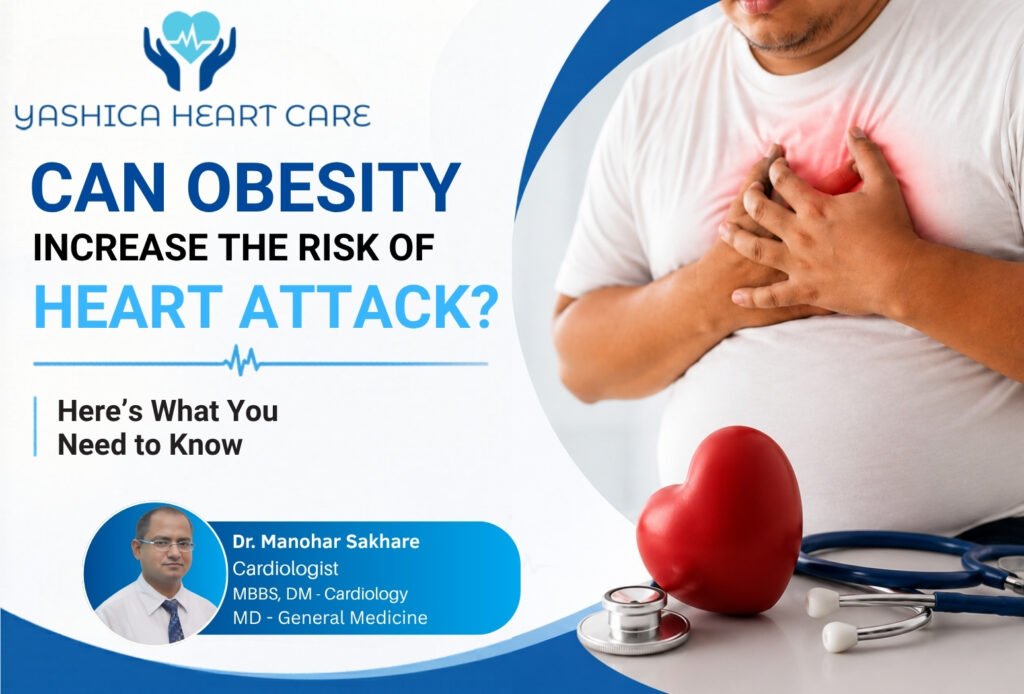
Obesity increasing the risk of heart attack with heart health awareness by Dr Manohar Sakhare at Yashica Heart Care
Uncategorized

Can Obesity Increase the Risk of Heart Attack? Here’s What You Need to Know

Obesity is not only related to weight gain or physical appearance. It is a serious health condition that can silently affect different organs of the body, especially the heart. According to global health reports, obesity rates have nearly tripled since 1975, and millions of people today face obesity-related heart complications. Seeking the Best Obesity Treatment in Pune at the right time can help lower these risks and improve overall health. Many individuals do not realize that excess body weight forces the heart to work harder every single day. Over time, this added pressure can increase the chances of high blood pressure, diabetes, blocked arteries, and even heart attacks. Early consultation with the Best Cardiologist in Pune can help identify warning signs before they become severe. With healthy lifestyle changes and expert guidance from the Best Heart Specialist in Pune, obesity-related heart problems can often be managed effectively, helping individuals lead healthier and more active lives. What Is Obesity? Obesity is a medical condition where excessive body fat affects overall health and increases the risk of several diseases. Doctors commonly use Body Mass Index (BMI) to evaluate whether a person’s weight falls within a healthy range. Understanding obesity early and seeking the Best Obesity Treatment in Pune can help prevent long-term health complications. A BMI above 25 is considered overweight A BMI above 30 is considered obesity Obesity usually develops gradually due to unhealthy eating habits, lack of physical activity, stress, poor sleep, and lifestyle imbalance. If left unmanaged, it can negatively impact heart health, cholesterol levels, blood pressure, and overall quality of life. How Obesity Affects Heart Health The heart continuously pumps blood and oxygen throughout the body. When body weight increases excessively, the heart has to work much harder to meet the body’s demands. This additional pressure can slowly weaken the heart and increase the risk of serious cardiovascular problems. Seeking the Best Obesity Treatment in Pune at the right stage can help reduce these complications. Studies suggest that obesity may increase the risk of heart disease by nearly 40–60%. This happens because obesity is closely linked with conditions such as: High blood pressure High cholesterol Diabetes Poor blood circulation Increased pressure on the heart Over time, these conditions can damage blood vessels, reduce blood flow, and significantly raise the chances of heart attack and other heart-related disorders. The Hidden Link Between Obesity and Heart Attack Many people think heart attacks occur suddenly without warning. In reality, obesity slowly damages the body over time and increases several risk factors that affect heart health. This is why seeking the Best Obesity Treatment in Pune early becomes extremely important. Excess body fat increases inflammation, raises cholesterol levels, and narrows the arteries supplying blood to the heart. As the arteries become narrower, blood flow decreases, putting additional pressure on the heart and increasing the risk of heart attack. Medical research shows that people with obesity are nearly twice as likely to develop coronary artery disease compared to those with a healthy weight. Proper weight management, lifestyle improvement, and timely medical care are essential for protecting long-term heart health. Common Symptoms That Should Never Be Ignored Obesity-related heart conditions often develop slowly, which is why many people fail to recognize the early warning signs. Seeking the Best Obesity Treatment in Pune at the right time can help prevent serious complications. Common symptoms include: Chest discomfort or heaviness Shortness of breath during activity Extreme tiredness or low energy Fast or irregular heartbeat Swelling in the legs or ankles Difficulty walking or climbing stairs Ignoring these symptoms for a long time may increase the risk of heart disease and heart attack. Early medical attention and healthy lifestyle changes can make a major difference. Why Obesity Increases Heart Attack Risk Obesity affects the heart in multiple harmful ways and gradually raises the risk of severe heart conditions. 1. High Blood Pressure Extra body fat increases pressure on blood vessels, forcing the heart to work harder and raising blood pressure levels. 2. Cholesterol Imbalance Obesity often raises bad cholesterol (LDL) and lowers good cholesterol (HDL), leading to plaque buildup in arteries. 3. Increased Diabetes Risk People with obesity are at higher risk of type 2 diabetes, which damages blood vessels and negatively affects heart health. 4. Reduced Physical Activity Lack of movement weakens heart function and reduces overall cardiovascular fitness. Together, these factors significantly increase the chances of heart attack and other cardiovascular diseases. How Doctors Diagnose Obesity-Related Heart Problems A Best Cardiologist in Pune may recommend several tests to evaluate heart health and obesity-related risks: BMI Evaluation Measures whether body weight is within a healthy range. Blood Pressure Monitoring Helps detect hypertension. Lipid Profile Test Checks cholesterol levels. ECG & Echocardiography Evaluate heart rhythm and function. Stress Test Assesses heart performance during physical activity. Early diagnosis can help prevent severe complications and improve treatment outcomes. Treatment Options for Obesity and Heart Health Treatment depends on overall health, weight, and heart condition. Lifestyle Modifications Healthy eating habits Regular exercise Better sleep routine Stress management Medical Management Doctors may prescribe medications to control: Blood pressure Cholesterol Blood sugar levels Weight-related complications Weight Management Programs Structured programs help patients achieve healthy weight loss safely and effectively. These approaches support the Best Obesity Treatment in Pune while improving long-term heart health. Lifestyle Changes That Protect Your Heart Studies show that losing even 5–10% of body weight can greatly improve heart health. Healthy habits include: Eating more fruits and vegetables Reducing processed foods Walking daily for at least 30 minutes Avoiding smoking and alcohol Managing stress effectively Small lifestyle improvements can create major long-term benefits for the heart. Why Choosing the Right Doctor Matters Heart and obesity-related conditions require proper diagnosis, regular monitoring, and long-term care. Patients usually prefer the Best Heart Specialist in Pune who focuses not only on treatment but also on prevention and lifestyle improvement. Dr. Manohar Sakhare is known for his patient-focused approach and expertise in managing obesity-related heart risks. His focus remains on accurate diagnosis,

Modern heart care for accurate diagnosis and treatment with best cardiac catheterization in Pune by Dr Manohar Sakhare
Uncategorized

Modern Heart Care for Accurate Diagnosis & Treatment with the Best Cardiac Catheterization in Pune

Heart problems often start quietly, with symptoms like mild chest discomfort or unusual tiredness that are easy to overlook. Many people assume it is just stress or fatigue, but timely detection can make a big difference. Best Cardiac Catheterization in Pune plays a key role in identifying heart issues early and guiding the right treatment before complications arise. At Yashica Heart Care Centre, Dr. Manohar Sakhare uses advanced methods to provide accurate diagnosis and effective care. Known as the Best Heart Specialist in Pune, he ensures patients feel informed and comfortable throughout their treatment journey. Patients also consider him among the Best Cardiologist in Indore for his approach to managing complex heart conditions with clarity and care. What is Cardiac Catheterization? Cardiac catheterization is a safe and minimally invasive procedure used to understand how well your heart is working. As part of the Best Cardiac Catheterization in Pune, a thin, flexible tube called a catheter is gently inserted through a blood vessel and guided to the heart for detailed evaluation. This procedure helps to: Detect blockages in the arteries Measure blood flow inside the heart Check overall heart function With the support of experienced doctors, often recognized as the Best Cardiologist in Indore, this method becomes one of the most reliable ways to identify heart problems at an early stage and start the right treatment on time. Why is Early Diagnosis Important? Heart conditions often develop slowly, showing mild symptoms that are easy to ignore. However, studies suggest that nearly 80% of heart diseases can be managed or prevented with timely detection and healthy lifestyle changes. With the help of the Best Cardiac Catheterization in Pune, doctors can: Detect problems at an early stage before they become serious Plan the most effective treatment approach Lower the chances of heart attacks and complications Guided by the expertise of the Best Heart Specialist in Pune and experienced professionals known as the Best Cardiologist in Indore, early diagnosis ensures better outcomes and faster recovery. Benefits of Cardiac Catheterization With advancements in modern heart care, cardiac catheterization has become a safe and effective way to diagnose and manage heart conditions. Through the Best Cardiac Catheterization in Pune, patients can benefit from accurate and timely evaluation of their heart health. Key benefits include: Precise diagnosis of various heart conditions Helps in planning treatments like angioplasty Minimally invasive procedure with faster recovery Lower risk of complications Under the care of the Best Heart Specialist in Pune and guidance from experts often regarded as the Best Cardiologist in Indore, most patients can return home within a day, making the process convenient and reassuring. Common Conditions Detected Through Cardiac Catheterization Cardiac catheterization is widely used to diagnose multiple heart-related issues. Under the guidance of the Best Heart Specialist in Pune, this procedure helps identify: Coronary artery disease (blocked arteries) Congenital heart defects (present from birth) Heart valve problems Heart muscle disorders Experts often compare such advanced care with standards followed by the Best Cardiologist in Indore, ensuring accurate diagnosis and timely treatment. Who is at Higher Risk of Heart Disease? Certain factors increase the chances of developing heart problems. Understanding these risks can help in taking preventive steps. Experts, including the Best Cardiologist in Indore, often highlight these common risk factors: High blood pressure Diabetes High cholesterol levels Smoking habits Family history of heart disease If you fall into any of these categories, regular check-ups and timely tests like the Best Cardiac Catheterization in Pune can help monitor your heart health effectively. Lifestyle Tips to Keep Your Heart Healthy Along with medical care, maintaining a healthy lifestyle plays a major role in preventing heart diseases. Even after undergoing the Best Cardiac Catheterization in Pune, doctors recommend simple daily habits such as: Eating a balanced and low-fat diet Exercising regularly for at least 30 minutes Managing stress through relaxation techniques Avoiding smoking and limiting alcohol intake These small steps can improve heart health and reduce future risks. Services Offered at Yashica Heart Care Centre At Yashica Heart Care Centre, Dr. Manohar Sakhare offers a wide range of advanced heart care services focused on accurate diagnosis and effective treatment. With the support of the Best Cardiac Catheterization in Pune, patients receive complete care for various heart conditions. Diagnostic Services Cardiac catheterization for detailed heart evaluation ECG and continuous heart monitoring Stress testing to assess heart performance Treatment Services Angioplasty for opening blocked arteries Management of different heart diseases Treatment and care for heart failure Preventive Care Risk assessment for early detection Lifestyle and diet guidance Regular heart check-ups With guidance from the Best Heart Specialist in Pune and expertise comparable to the Best Cardiologist in Indore, every service is designed to support long-term heart health and overall well-being. How the Procedure Works Cardiac catheterization is a simple procedure performed under local anesthesia, ensuring that the patient remains comfortable throughout. As part of the Best Cardiac Catheterization in Pune, the process is carried out with precision and care. Steps involved include: A thin, flexible tube is inserted into a blood vessel The catheter is carefully guided towards the heart A special dye is used to clearly visualize the arteries With the expertise of the Best Heart Specialist in Pune and experienced professionals known as the Best Cardiologist in Indore, the entire procedure usually takes around 30–60 minutes. Most patients experience minimal discomfort and recover quickly. Recovery After the Procedure Recovery after cardiac catheterization is generally quick and smooth. With the support of the Best Cardiac Catheterization in Pune, patients can expect a safe and comfortable healing process. Doctors usually advise patients to: Take proper rest for at least a day Avoid heavy physical activities for a short period Follow all medical instructions carefully Under the guidance of the Best Heart Specialist in Pune and experienced care similar to the Best Cardiologist in Indore, most individuals are able to return to their normal routine within a few days without complications. Why Choose Yashica Heart Care Centre? Yashica Heart Care Centre is

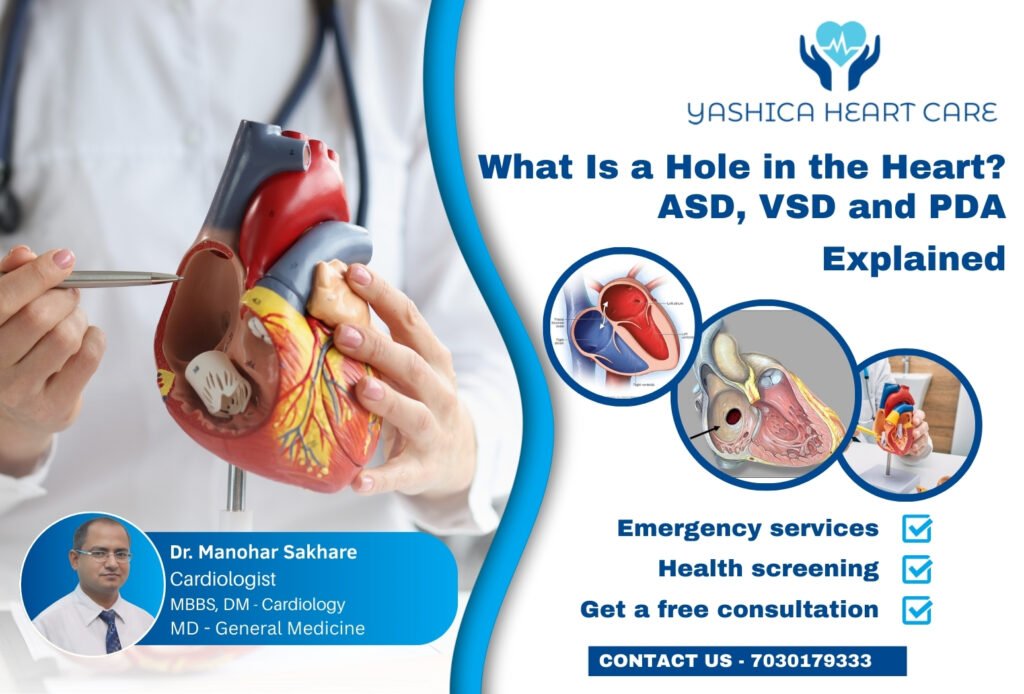
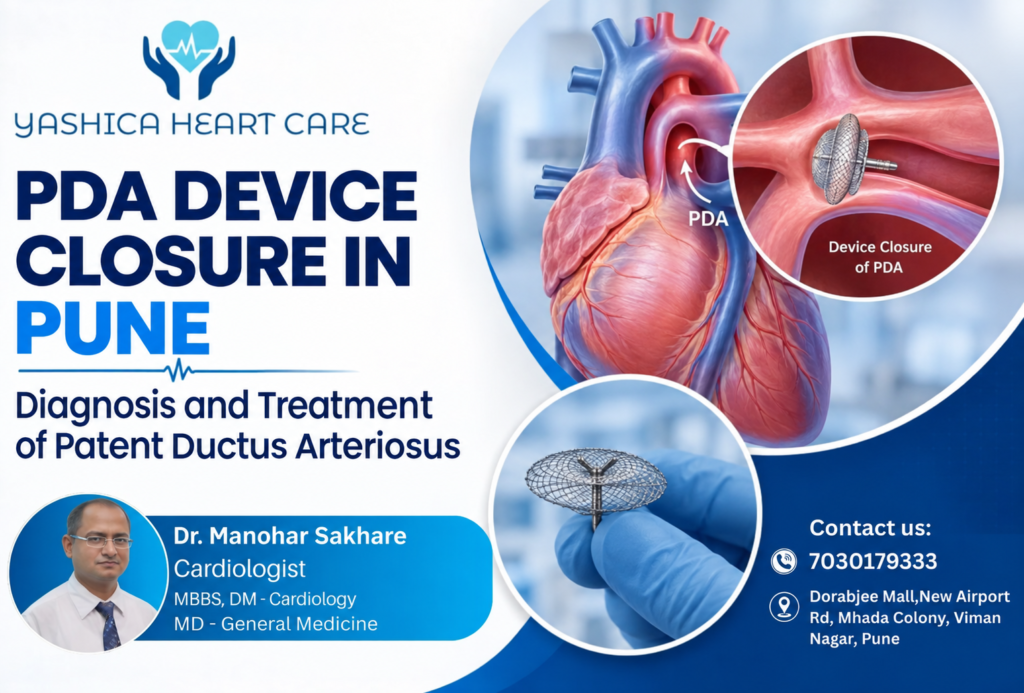
ASD VSD PDA heart defect explanation by Dr Manohar Sakhare cardiologist in Pune
Uncategorized

What Is a Hole in the Heart? ASD, VSD and PDA Explained

Complete Guide to Hole in the Heart Treatment in Pune Many parents and even adults feel scared when they hear the term “hole in the heart.” It sounds serious and dangerous. But in many cases, this condition can be treated safely with modern medical procedures. In this blog, we will clearly explain ASD VSD PDA Explained in simple language so you understand what it means, what the symptoms are, and how treatment works. At Yashica Heart Care Centre, Dr. Manohar Sakhare, known as the Best doctor for ASD VSD device closure in Pune, provides advanced and safe Hole in the Heart Treatment in Pune. Patients from Viman Nagar, Kharadi, Wagholi, Lohegaon, Vishrantwadi, Yerwada, and nearby areas trust his experience and patient-friendly approach. What Is a Hole in the Heart? A “hole in the heart” is a birth defect. It means there is an abnormal opening in the wall that separates the heart chambers. The heart has four chambers: Two upper chambers (atria) Two lower chambers (ventricles) The walls between these chambers are called septum. If there is a gap or hole in the septum, it allows blood to flow in the wrong direction. This condition is called a congenital heart defect. Many cases can be treated successfully with modern Hole in the Heart Treatment in Pune. Types of Hole in the Heart There are three main types: 1️⃣ ASD – Atrial Septal Defect ASD is a hole in the wall between the two upper chambers of the heart. In ASD: Oxygen-rich blood mixes with oxygen-poor blood. Extra blood flows to the lungs. The heart works harder than normal. Many small ASDs close on their own. Larger ones may require device closure by the Best doctor for ASD VSD device closure in Pune. 2️⃣ VSD – Ventricular Septal Defect VSD is a hole in the wall between the two lower chambers. This type may cause: Fast breathing in babies Poor weight gain Frequent chest infections Moderate or large VSD may require Hole in the Heart Treatment in Pune through surgery or device closure. 3️⃣ PDA – Patent Ductus Arteriosus PDA is slightly different. It is not a hole in the septum, but an extra blood vessel that does not close after birth. In PDA: Blood flows abnormally between two major arteries. The heart and lungs work harder. PDA can be treated safely through catheter-based closure by a heart specialist in Viman Nagar. ASD VSD PDA Explained in Simple Words Let’s simplify: ASD = Hole in upper chambers VSD = Hole in lower chambers PDA = Extra open blood vessel All three conditions may need evaluation by a specialist. Understanding ASD VSD PDA Explained helps parents feel less scared and more informed. What Are Hole in Heart Symptoms? Symptoms depend on the size of the hole. Common Hole in heart symptoms include: Fast breathing Poor weight gain in babies Frequent chest infections Tiredness Shortness of breath Heart murmur (abnormal sound) Swelling in legs (in severe cases) Some people may not have symptoms for many years. If you notice any Hole in heart symptoms, consult a heart specialist in Viman Nagar immediately. Is a Hole in the Heart Dangerous? Small holes may not cause major problems. However, larger untreated holes can lead to: Lung pressure increase Heart failure Irregular heartbeat Delayed growth in children Early diagnosis allows safe Hole in the Heart Treatment in Pune. How Is a Hole in the Heart Diagnosed? Diagnosis may include: Physical examination 2D Echo (heart ultrasound) ECG Chest X-ray 2D Echo is the most important test to confirm ASD, VSD, or PDA. At Yashica Heart Care Centre, advanced diagnostic facilities are available under one roof. Modern Hole in the Heart Treatment in Pune Earlier, open-heart surgery was the only option. Today, many patients can be treated with device closure procedures. What Is Device Closure? A thin catheter is inserted through a blood vessel. A small device is placed to close the hole. No large chest cut is needed. Recovery is faster. Dr. Manohar Sakhare is known as the Best doctor for ASD VSD device closure in Pune because of his expertise in minimally invasive procedures. Benefits of Device Closure No large surgery scar Less pain Short hospital stay Faster recovery High success rate Modern Hole in the Heart Treatment in Pune has made treatment much safer and easier. When Is Surgery Required? Surgery may be required if: The hole is very large Device closure is not possible There are multiple defects The Best doctor for ASD VSD device closure in Pune will decide the best treatment after proper evaluation. Why Choose Yashica Heart Care Centre? Patients trust Dr. Manohar Sakhare because he is recognized as the: ✔ Best doctor for ASD VSD device closure in Pune✔ Experienced structural heart specialist✔ Skilled in catheter-based procedures✔ Compassionate and patient-friendly The centre is conveniently located in Viman Nagar and easily accessible from Kharadi, Wagholi, Lohegaon, Vishrantwadi, and Yerwada. Families searching for reliable Hole in the Heart Treatment in Pune choose this centre for safety and expertise. Can a Hole in the Heart Close on Its Own? Small ASD or VSD in babies sometimes close naturally. However, moderate or large defects usually require treatment. Regular follow-up with a heart specialist in Viman Nagar is important. Life After Treatment After successful Hole in the Heart Treatment in Pune: Children can grow normally. Adults can live healthy lives. Regular follow-ups are necessary. Medicines may be prescribed for some time. Most patients return to normal life after treatment. Prevention and Awareness Since this is a congenital condition, it cannot always be prevented. However: Regular prenatal checkups help early detection. Newborn screening is important. Early consultation reduces complications. Understanding ASD VSD PDA Explained helps families take timely action. Final Thoughts A “hole in the heart” sounds scary, but modern medicine has made treatment safe and effective. If you notice Hole in heart symptoms, do not panic. Consult a heart specialist in Viman Nagar immediately. For advanced and safe Hole in the Heart Treatment in

Difference between angiography and angioplasty explained by Dr. Manohar Sakhare cardiologist in Pune
Uncategorized

What Is the Difference Between Angiography and Angioplasty?

Explained by the Best Doctor for Angioplasty in Pune Many patients get confused between angiography and angioplasty. The names sound similar, but the purpose of each procedure is different. Understanding the difference helps you make better decisions about heart health. At Yashica Heart Care Centre, Dr. Manohar Sakhare, known as the Best doctor for angioplasty in Pune, explains these procedures clearly to every patient. If you are advised to undergo a Coronary angiogram in Viman Nagar, this guide will help you understand what it means and what may happen next. If you live in Viman Nagar, Kharadi, Wagholi, Lohegaon, Vishrantwadi, Yerwada, or nearby areas, this blog will clear all your doubts. What Is Angiography? Angiography is a diagnostic test. It is used to check whether your heart arteries are blocked or narrowed. During a Coronary angiogram in Viman Nagar, a thin tube called a catheter is inserted into a blood vessel. A special dye is injected, and X-ray images are taken. These images show whether there is any blockage in the heart arteries. So remember: 👉 Angiography = Test to detect blockage👉 It does NOT treat the blockage Many patients ask, “Is angiography painful?”The answer is no. It is done under local anesthesia. You may feel slight pressure, but it is usually not painful. What Is Angioplasty? Angioplasty is a treatment procedure. It is done if blockage is found during angiography. In angioplasty: A balloon is used to open the blocked artery A stent (small metal mesh tube) is placed Blood flow is restored If your angiography shows severe blockage, the Best doctor for angioplasty in Pune may recommend angioplasty immediately or later. So remember: 👉 Angioplasty = Treatment to open blockage Angiography vs Angioplasty – Main Difference Let us clearly understand the difference between Angiography vs Angioplasty: Angiography Angioplasty Diagnostic test Treatment procedure Detects blockage Removes blockage Uses dye and X-ray Uses balloon and stent Takes 20–30 minutes Takes 30–90 minutes No stent placed Stent is placed This simple comparison helps patients understand the difference between Angiography vs Angioplasty. When Is Angiography Needed? A Coronary angiogram in Viman Nagar may be advised if you have: Chest pain Breathlessness Positive stress test History of heart attack Abnormal ECG Angiography helps the heart specialist in Pune understand the severity of blockage. When Is Angioplasty Needed? Angioplasty is needed when: Blockage is severe Blood flow is significantly reduced There is risk of heart attack Patient has ongoing chest pain The Best doctor for angioplasty in Pune will decide based on angiography results. Is Angiography Painful? This is one of the most common questions. Is angiography painful? No, it is not usually painful. Local anesthesia is given to numb the area. Most patients feel only mild pressure. The procedure is safe when done by an experienced heart specialist in Pune. Radial Angiography – A Modern Method Today, many procedures are done through the wrist. This is called radial angiography. Benefits include: Less bleeding Faster recovery Smaller puncture Early discharge At Yashica Heart Care Centre, we provide advanced Coronary angiogram in Viman Nagar using modern techniques. What Happens After Angiography? After angiography: If no blockage is found, medicines and lifestyle changes are advised. If mild blockage is found, medicines may be enough. If severe blockage is found, angioplasty may be recommended. The Best doctor for angioplasty in Pune will explain the next step clearly. What Happens After Angioplasty? After angioplasty: Blood flow improves immediately. Chest pain reduces. Patient stays in hospital for 1–2 days. Medicines like blood thinners are prescribed. Regular follow-up with a heart specialist in Pune is important. Is Angioplasty Safe? Yes, angioplasty is a commonly performed and safe procedure when done by an experienced doctor. Choosing the Best doctor for angioplasty in Pune ensures better safety and successful results. Why Early Detection Is Important Many people ignore chest pain and delay diagnosis. Ignoring symptoms may lead to: Heart attack Heart failure Sudden cardiac arrest Early Coronary angiogram in Viman Nagar can detect problems before they become serious. Why Choose Yashica Heart Care Centre? Patients trust Dr. Manohar Sakhare because he is known as the Best doctor for angioplasty in Pune for: ✔ Advanced cath lab technology✔ Radial approach procedures✔ Clear explanation✔ Personalized care✔ Safe treatment The centre is located in Viman Nagar and easily accessible from Kharadi, Wagholi, Lohegaon, Vishrantwadi, and Yerwada. Lifestyle Tips After Angioplasty After treatment: Take medicines regularly Eat healthy food Avoid smoking Exercise as advised Manage stress These steps reduce future blockage risk. Final Thoughts Understanding the difference between Angiography vs Angioplasty helps reduce fear and confusion. Remember: Angiography is a test. Angioplasty is treatment. If you experience chest pain or breathlessness, consult a heart specialist in Pune immediately. For advanced Coronary angiogram in Viman Nagar and safe treatment, visit Yashica Heart Care Centre and consult the Best doctor for angioplasty in Pune. Your heart health should never be ignored. Frequently Asked Questions (FAQ) 1. What is the main difference between angiography and angioplasty? Angiography is a diagnostic test to detect blockage. Angioplasty is a treatment procedure to open blocked arteries. 2. Is angiography painful? Most patients ask, “Is angiography painful?” It is usually not painful. Local anesthesia is given, and discomfort is minimal. 3. How long does angioplasty take? Angioplasty usually takes 30–90 minutes depending on the blockage severity. 4. Can angioplasty be done immediately after angiography? Yes. If severe blockage is detected during a Coronary angiogram in Viman Nagar, angioplasty may be done immediately. 5. Who is the best doctor for angioplasty in Pune? Dr. Manohar Sakhare at Yashica Heart Care Centre is recognized as the Best doctor for angioplasty in Pune for advanced and safe cardiac procedures. 6. Is angioplasty safe? Yes, angioplasty is safe when performed by an experienced heart specialist in Pune using modern equipment.

Early signs of heart blockage with chest pain symptoms explained by cardiologist Dr. Manohar Sakhare Pune
Uncategorized

Early Signs of Heart Blockage You Should Never Ignore

Expert Advice from the Best Cardiologist in Pune Heart disease is one of the leading causes of death in India today. Many people believe heart problems happen suddenly, but in reality, the body gives warning signs much earlier. The problem is that most people ignore those signs. Understanding the Early Signs of Heart Blockage can help you take action before a serious heart attack happens. At Yashica Heart Care Centre, Dr. Manohar Sakhare, known as the Best Cardiologist in Pune, helps patients identify heart problems early and provides advanced heart blockage treatment in Pune. If you live in Viman Nagar, Kharadi, Wagholi, Lohegaon, Vishrantwadi, Yerwada, or nearby areas, this guide will help you understand when to visit a heart specialist in Pune. What Is Heart Blockage? Heart blockage happens when the arteries supplying blood to the heart become narrow due to cholesterol and fat deposits. This condition is called coronary artery disease. When arteries narrow: Blood flow reduces Oxygen supply decreases The heart muscle becomes weak Risk of heart attack increases Recognizing the Signs of coronary artery blockage early can prevent life-threatening complications. Why Heart Blockage Is Increasing in Young People Earlier, heart disease was common after the age of 50. Today, even people in their 30s and 40s are facing heart blockages. Reasons include: Stressful lifestyle Lack of exercise Smoking Junk food Diabetes High blood pressure Regular checkups with the Best Cardiologist in Pune can help detect problems early. 1️⃣ Chest Pain or Tightness Chest pain is the most common symptom. It may feel like: Pressure Heaviness Burning Squeezing This pain may last a few minutes and may spread to the arm or neck. Many people think it is gas or acidity. But it could be one of the Early Signs of Heart Blockage. If chest discomfort happens repeatedly, consult a heart specialist in Pune immediately. 2️⃣ Shortness of Breath Do you feel breathless while climbing stairs or walking short distances? This could mean your heart is not pumping enough blood. Breathlessness is one of the important Signs of coronary artery blockage, especially if it happens along with chest pain. 3️⃣ Unusual Fatigue Feeling tired all the time without heavy work is not normal. If your heart is not receiving enough blood, your body will feel weak. Women especially may experience extreme tiredness as an early symptom. Do not ignore this warning. Early consultation allows proper heart blockage treatment in Pune. 4️⃣ Pain in Arm, Jaw, Neck or Back Heart pain does not always stay in the chest. Pain may spread to: Left arm Both arms Jaw Neck Upper back These are common Early Signs of Heart Blockage and require medical evaluation. 5️⃣ Sweating Without Reason Sudden cold sweating without physical activity can be dangerous. If sweating is combined with chest discomfort or breathlessness, it may indicate serious heart blockage. Visit the Best Cardiologist in Pune immediately in such cases. 6️⃣ Dizziness or Fainting Blocked arteries may reduce blood supply to the brain. This can cause: Lightheadedness Dizziness Fainting These are serious Signs of coronary artery blockage that should not be ignored. 7️⃣ Nausea or Indigestion Some people experience: Stomach discomfort Vomiting sensation Indigestion Especially women may experience these symptoms during heart blockage. It is always safer to consult a heart specialist in Pune if symptoms are unusual. Risk Factors You Should Know You are at higher risk if you have: Diabetes High cholesterol High blood pressure Smoking habit Obesity Family history of heart disease Regular check-ups with the Best Cardiologist in Pune can help prevent complications. When Symptoms Become Emergency Call emergency services immediately if you have: Severe chest pain lasting more than 10 minutes Sweating with discomfort Sudden breathlessness Pain spreading to arm or jaw Loss of consciousness Early action saves lives. How Heart Blockage Is Diagnosed At Yashica Heart Care Centre, diagnosis may include: ECG Checks heart rhythm. 2D Echo Shows heart structure. TMT (Stress Test) Evaluates heart under exercise. Coronary Angiogram The most accurate test to detect blockage. Proper diagnosis ensures correct heart blockage treatment in Pune. Treatment Options for Heart Blockage Treatment depends on blockage severity. 1️⃣ Lifestyle Changes For mild blockage. 2️⃣ Medicines To control cholesterol and blood pressure. 3️⃣ Coronary Angioplasty A stent is placed to open blocked arteries. 4️⃣ CABG Surgery Recommended in severe cases. Choosing the Best Cardiologist in Pune ensures the right treatment plan. Why Choose Yashica Heart Care Centre? Patients trust Dr. Manohar Sakhare because he is recognized as the Best Cardiologist in Pune for: ✔ Advanced technology ✔ Radial approach procedures ✔ Personalized care ✔ Clear communication ✔ Safe heart blockage treatment in Pune The centre is conveniently located in Viman Nagar. How to Prevent Heart Blockage Prevention is possible with simple steps: Eat fresh fruits and vegetables Avoid fried food Exercise daily Stop smoking Manage stress Control diabetes and BP Regular consultation with a heart specialist in Pune reduces risk. Final Thoughts Never ignore the Early Signs of Heart Blockage. Small symptoms can become serious if untreated. Early diagnosis and proper heart blockage treatment in Pune can prevent heart attack and save life. If you notice any warning signs, consult the Best Cardiologist in Pune at Yashica Heart Care Centre. Your heart health is in your hands. Frequently Asked Questions (FAQ) 1. What are the early signs of heart blockage? The Early Signs of Heart Blockage include chest pain, breathlessness, unusual fatigue, sweating, dizziness, and pain spreading to the arm or jaw. 2. Can heart blockage happen without symptoms? Yes, sometimes blockage develops slowly without clear symptoms. That is why regular check-ups with a heart specialist in Pune are important. 3. Is chest pain always due to heart blockage? Not always. It may be due to acidity or muscle strain. But repeated chest pain should always be evaluated by the Best Cardiologist in Pune. 4. What is the best test to detect heart blockage? A coronary angiogram is the most accurate test to detect blockage. 5. How is heart blockage treated in Pune? Treatment includes